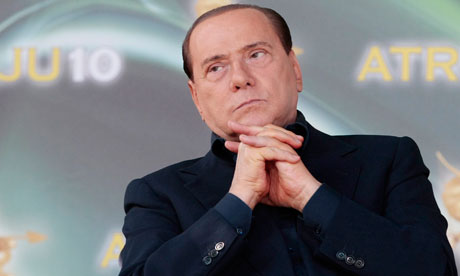
I feel trapped. I try to get on with my life, but he finds me everywhere. On my couch, when I turn on my computer, and in my office, where he dominates all discussion. He's there in the morning, when I drink my cappuccino at the Ruschena bar in Rome and my fellow customers make jokes about him. He's there at parents' evening, where apparently conservative parents stop and ask me whether we should start a revolution.
And he's there in the evening, when I meet my exhausted, centre-left friends. The girls' nights out are the worst. The constant exposure to images of him, our 74-year-old prime minister, and of the half-naked young women allegedly linked to him is seriously affecting our mood. Not to mention our libido.
Being an Italian in what are – maybe – the last days of Silvio Berlusconiis confusing. Being an Italian woman is even more so. Many of us are worn out and ashamed, but we are also divided. There are those of us who can't take it any more. But there are also those who seek somehow to justify Berlusconi's behaviour.
"Oh well," they shrug. "Men will be men." We don't care, they say, about what he does in the privacy of his own...


 Densifier, densifier, densifier. Hors de la densification urbaine, pas de salut. C'est aujourd'hui la pensée unique de l'urbanisme, qui inspire par exemple les projets du Grand Paris.
 La formation numérique des personnes de faible niveau de qualification ne pose pas de problème particulier, à condition de prendre en compte leur difficulté majeure: l'accès médiocre ou quasiment nul qu'ils ont aux outils numériques, que ce soit dans leur entreprise ou dans leur famille. Le programme de formation doit intégrer les mêmes applications que celles qu'ils pourront trouver ensuite sur leur bureau ou sur l'ordinateur familial. Ainsi l'action de formation pourra leur apporter, au-delà de son objet propre, une aide à franchir le barrage qu'ils rencontrent dans leur vie quotidienne.







 Αναρτήσεις


